
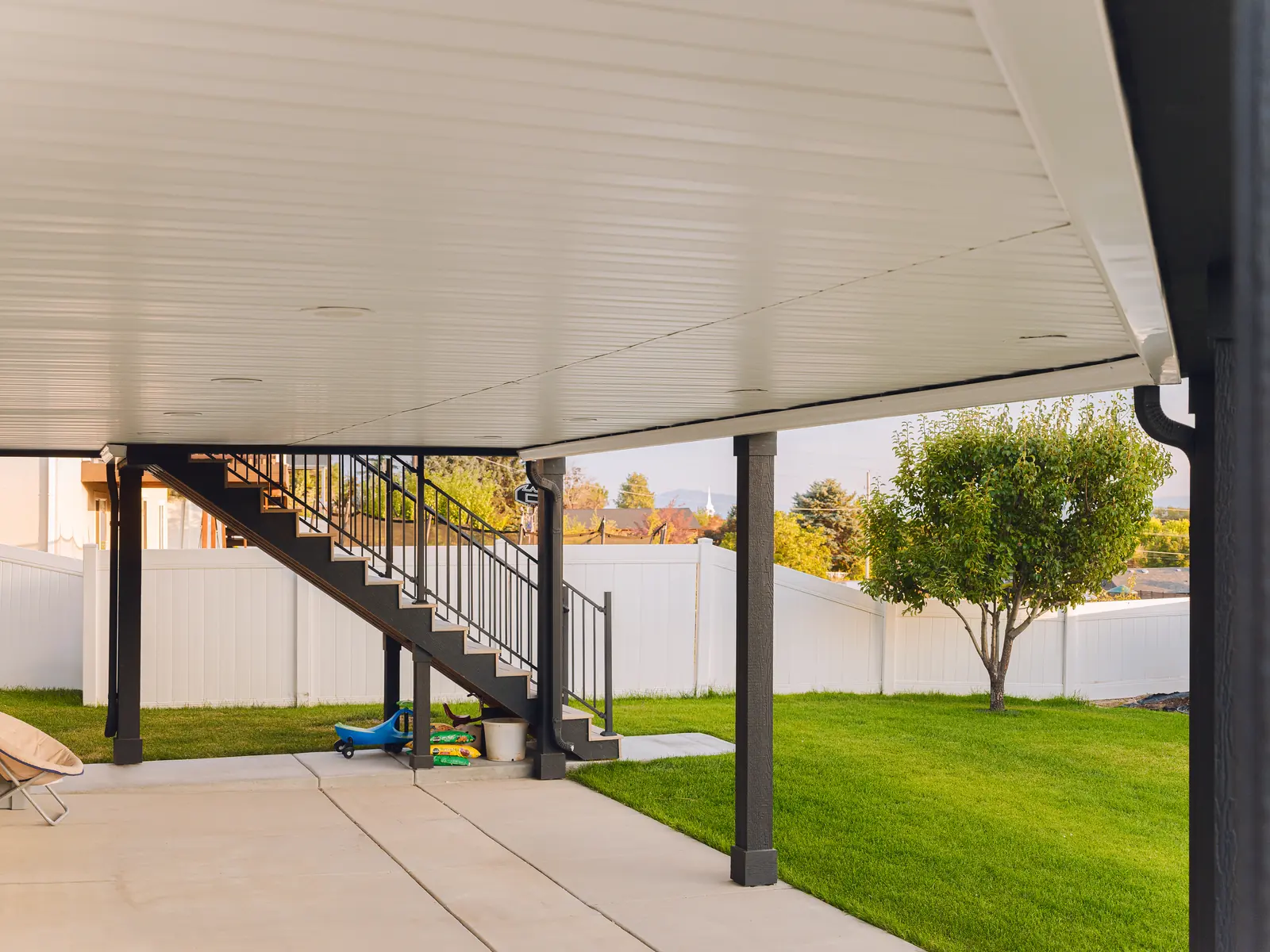
A lot of homes in Utah County have walk-out basements, which means the deck off the kitchen is a full story up. That leaves a big space underneath. Without drainage, it’s a spot where rain and snowmelt drip through the gaps in the boards, so it’s only good for storing things that don’t mind getting wet. With an under-deck drainage system like Trex RainEscape, that space can become a dry patio, an outdoor living room or a storage area.
How Trex RainEscape works
Deck boards are spaced with small gaps so water can drain off the surface. RainEscape catches that water just below the boards. It’s a system of troughs and downspouts installed over the joists, under the decking. Water that falls through the gaps lands in the troughs, runs toward the outside edge of the deck, and drains into a gutter and downspout that carry it away from the house.
Because it sits on top of the joists, it also keeps water off the framing. Joists and beams that stay dry last longer, which is the same idea behind the G-Tape joist tape we use on the tops of wood joists.
What you can do with a dry space
Once the space under the deck stays dry, it becomes usable in ways a wet one isn’t:
- A covered patio. Outdoor furniture, a TV, a grill area or a hot tub can sit under the deck out of the rain and the afternoon sun.
- Storage. Bikes, lawn equipment and seasonal gear stay dry. Add skirting and doors, and it becomes a storage room. See our post on under-deck storage.
- A finished ceiling. With drainage in place, the underside can be finished with a soffit ceiling, recessed lights and a ceiling fan, so it feels like an outdoor room instead of the underside of a deck.
The Pleasant Grove foothills deck has a patio underneath with stairs down from the deck above, and the Parade of Homes Tiger Wood deck has a covered patio below a large second-story deck.
Snowmelt is the real test in Utah
Rain storms in Utah are usually short. Snow is a different story. A foot of snow on a deck can take days to melt, and on sunny winter afternoons it drips through the boards for hours, then freezes into ice on the patio below overnight. A drainage system catches that meltwater and sends it to the downspout instead, which keeps the patio underneath drier and helps cut down on icy spots.
Where the downspout drains matters. We plan it so water goes away from the foundation and doesn’t run across a walkway where it can freeze.
Plan it during the build
RainEscape installs over the joists before the deck boards go down, so the easiest time to add it is when the deck is built. The troughs have to be laid out and sloped so water flows to the outer edge, and lighting or ceiling fan wiring under the deck is easier to plan at the same time.
Adding drainage to an existing deck usually means pulling up the deck boards. If you’re already planning to replace worn boards, that’s a good time to add it. If the boards are in great shape, we can talk through other options for the space below.
Things to keep in mind
- Gutters need cleaning. Leaves and debris can collect in the outer gutter, just like a roof gutter. A quick cleanout in the fall helps.
- It’s not a roof. Under-deck drainage handles water that falls through the gaps. Wind-driven rain can still blow in from the sides, so plan furniture accordingly.
- Check the manufacturer’s warranty. Coverage depends on the product and on proper installation, which is one reason to use an installer who follows Trex’s instructions.
Why have us install it
We’re a certified Pro Installer for Trex, as well as TimberTech, Deckorators and Fortress Railing. That means we install to the manufacturer’s requirements, and we can offer manufacturer-backed labor and material warranty coverage on qualifying projects. Our own 7-year workmanship warranty covers the build.
See more deck add-on ideas or our composite deck options, and contact us for a free estimate over the phone.